In the current era of rapid development in the new energy vehicle industry, the traction battery, as the core power source of the vehicle, has an assembly quality that directly determines the vehicle's range, service life, and driving safety. The assembly process for battery packs and battery modules is complex and precise, with screw tightening being one of the most critical and key processes. Unlike ordinary automotive part assembly, the characteristics of traction batteries—high voltage, precision, and high safety requirements—demand extreme levels of tightening accuracy, operational cleanliness, and data traceability.
Traditional tightening processes suffer from issues such as insufficient accuracy, susceptibility to generating debris, torque loss, and fragmented data. These can easily lead to safety hazards like electrical shorts, loose screws, and module deformation. Therefore, adopting an intelligent tightening system has become a core necessity for improving quality, increasing efficiency, and avoiding safety risks in new energy battery pack assembly.
I. Two Core Pain Points in New Energy Battery Pack Assembly
Traction battery modules consist of a large number of individual battery cells connected in series and parallel. They have a dense internal structure, concentrated high-voltage components, and complex and demanding assembly conditions. Many seemingly minor issues can trigger cascading safety failures. Two assembly challenges are particularly prominent and represent common process pain points faced by the industry.
1. Residual Metal Debris, Causing High-Voltage Short Circuit Safety Hazards
The interior of a battery pack integrates a large number of high-voltage modules, copper-aluminum connectors, and precision circuits, making it a highly precise, high-voltage workspace. Traditional screw feeding and tightening equipment have high operational vibration, easily generating metal debris and screw shavings during operation. If this tiny debris remains inside the battery pack, it can easily trigger a high-voltage electrical short circuit under conditions of vehicle vibration and high temperatures. This directly leads to battery failure, thermal runaway, and even severe safety accidents like fire or explosion. Furthermore, ordinary fastening processes cannot effectively remove debris generated during tightening. The problem of debris accumulation persists, making it difficult to eliminate the risk at the source.
2. Soft Connections Easily Deformed, Torque Loss Leading to Connection Failure
Copper-aluminum soft connections are widely used at the core connection points of battery modules. These materials are soft, easily deformed under pressure, and suffer from significant torque loss over long-term use. Traditional ordinary electric screwdrivers have low tightening accuracy and unstable torque control. Either the tightening force is too high, causing compression deformation of the connector or damage to the battery cells, or the pre-tightening force is insufficient, leading to loose screws or poor contact later on. This not only affects the conductive stability of the battery module, reducing the vehicle's range and power performance but also, due to inadequate residual torque, can cause virtual connections (high resistance) and overheating, creating persistent safety hazards.
II. Three Rigorous Process Requirements for the Battery Tightening Process
With the continuous improvement in the standardization, modularization, and automation of new energy battery module production, most stations have achieved automated operation. However, special stations like module connector assembly still require manual-assisted tightening. These critical safety stations have constrained operating conditions and extremely high standards, imposing three mandatory requirements on the tightening process, which are also key points of quality control.
1. Tight Working Space, Difficulty in Controlling Tightening Accuracy
The overall volume of the battery pack is large, yet its structure is compact. The layout space for production line stations is limited. Many core tightening points are located in confined, hard-to-reach areas requiring operation from multiple directions and angles (vertical, horizontal). When operators use traditional tools, problems such as crooked screws, floating screws, missed tightening, and stripped threads are very likely, making it difficult to ensure assembly consistency for every screw. This is a major cause of quality fluctuation in mass production.
2. Extremely High Safety Level, Zero Tolerance for Tightening Quality Defects
Bolt connections in battery packs are often critical points for electrical connections, uniformly classified as A/B safety levels in the industry, representing core vehicle safety control points. Tightening torque, angle, and pre-tightening force must strictly comply with process standards. If the residual torque is unqualified or screws are not securely fastened, screw loosening can occur under prolonged vehicle vibration conditions. This directly leads to major safety issues such as circuit failure, battery leakage, and thermal runaway. The process requires zero tolerance for defects.
3. Controllable Full-Process Data, Enabling Complete Traceability
New energy vehicle parts production adheres to strict quality management systems. Battery pack assembly, as a core safety process, requires complete retention of data from the entire tightening process. Core data including torque values, tightening angles, tightening curves, and operation status must be collected in real-time and stored uniformly, forming a complete quality traceability chain. This facilitates rapid identification of defective products, analysis of incoming material quality, and provides precise data support for subsequent process iteration and optimization.
III. Danikor's Intelligent Tightening Solution
Addressing the core pain points and process requirements of new energy traction battery module and battery pack assembly, Danikor has deeply cultivated the field of intelligent assembly. By accurately analyzing industry-specific operating conditions, Danikor has developed an integrated hardware-software intelligent tightening system. The combination solution featuring a high-precision angle-head transducerized tightening tool + WEB data acquisition software balances adaptability to complex working conditions, tightening accuracy stability, and complete data traceability. It provides a one-stop solution for safe production, quality improvement, and efficiency enhancement in new energy batteries.
1. High-Precision Angle-Head Tightening Tool: Adapts to Complex Working Conditions, Ensures Tightening Consistency
To address the difficulty of operating in tight spaces within the battery pack, Danikor's angle-head transducerized tightening tool features a dedicated 90° angle-head design. It can flexibly avoid equipment and structural obstacles, easily reach confined and compact points within the module, and perform tightening operations vertically, horizontally, and at multiple angles. Paired with an ergonomic handle design, it significantly reduces manual operator fatigue, improves operating comfort and overall assembly efficiency, and thoroughly solves assembly problems like crooked screws, floating screws, and missed tightening in tight stations.
In terms of tightening accuracy, the tool incorporates a self-developed high-precision algorithm and a high-precision planetary gear structure, achieving ultra-high accuracy control of 6σ ±5% across the full torque range. This meets the fastening requirements for high-safety-level screws in battery modules. It also features advanced tightening strategies, dynamically adjusting the tightening force based on the material characteristics of copper-aluminum soft connections. This effectively avoids deformation of the soft connection due to pressure and torque loss, ensuring every screw is in an optimal fastening state. During operation, torque and angle data are monitored in real-time, ensuring closed-loop control throughout the process. This guarantees the consistency and stability of the tightening quality of the battery module at the hardware level.
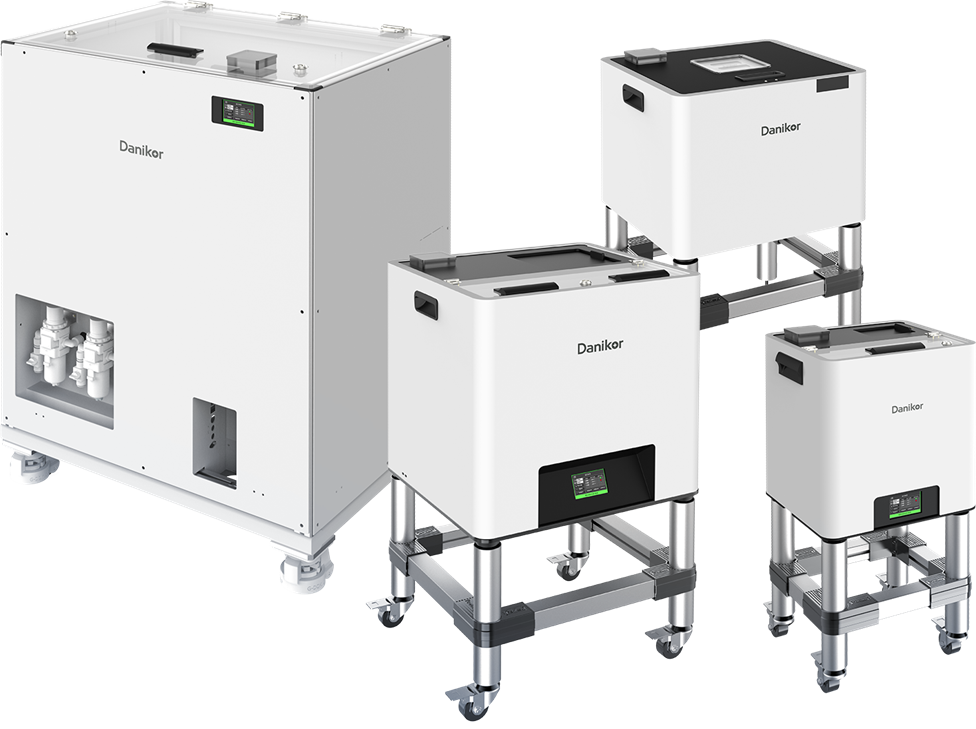
Furthermore, by combining a vibration-free stepped screw feeder + cleaning module and a vacuum suction and fastening process, the debris problem is solved at the source. The vibration-free screw feeding structure prevents the equipment from generating metal debris during operation. The cleaning module thoroughly purifies screws of impurities. The vacuum suction mode also promptly removes fine debris generated during the tightening operation, completely eliminating the risk of electrical shorts caused by residual debris.
2. WEB Data Acquisition Software: Comprehensive Data Traceability, Enabling Process Optimization
The accompanying WEB data acquisition software breaks the pain points of traditional assembly—being decentralized, unrecorded, and difficult to trace. It centrally collects operational data from multiple tightening tools on the production line, covering comprehensive information such as tightening OK/NG status, precise torque, tightening angle, and complete tightening curves. It achieves data interconnection, unified storage, and archiving across multiple stations, ensuring that every tightening process and the assembly of every screw is verifiable and traceable to its source.
In terms of quality control, the software supports data filtering analysis and tightening curve overlay comparison. It can accurately identify assembly anomalies, uncover potential failure risks, and assist enterprises in continuously optimizing tightening process parameters and improving the consistency of incoming material assembly. Simultaneously, the system automatically counts the number of good and defective products, making it easy for production managers to quickly troubleshoot process issues, control production quality, comprehensively improve the battery pack assembly quality control system, and provide solid data support for product iteration and upgrades.
IV. Conclusion
The assembly precision of the traction battery pack is the first line of defense for the safety and quality of new energy vehicles. Issues such as residual metal debris, torque loss in soft connections, assembly deviations in tight stations, and lack of data traceability may seem minor but directly impact vehicle safety and brand reputation. Traditional manual methods and ordinary tightening equipment can no longer meet the high-precision, high-safety, and traceable production requirements of new energy batteries.
Danikor's integrated hardware-software intelligent tightening solution precisely matches the complex assembly conditions of traction battery packs. It not only solves production pain points such as space constraints, debris hazards, and unstable torque but also, through a full-process data traceability system, achieves standardization of the tightening process and refined quality control. With its high-precision, high-stability, and highly intelligent assembly technology, Danikor comprehensively strengthens the safety defense line of new energy battery pack assembly, assisting new energy vehicle manufacturers and component suppliers in achieving intelligent manufacturing upgrades and enhancing product core competitiveness.