A bolt may seem tiny, but its fastening quality is directly related to the safety of large machinery, energy facilities, and even spacecraft. To ensure these connections are foolproof, tightening tools have evolved from raw brute force to precise control, and then to intelligent integration. Currently, mainstream tightening tools in the industry are mainly divided into three categories: manual torque wrenches, hydraulic wrenches, and electric torque guns. Each has its own strengths and plays an irreplaceable role on different industrial fronts. This article will provide an in-depth analysis of the technical details and applicable scenarios of these three types of tightening tools.
I. Torque Wrench: The Dexterous "Scalpel"
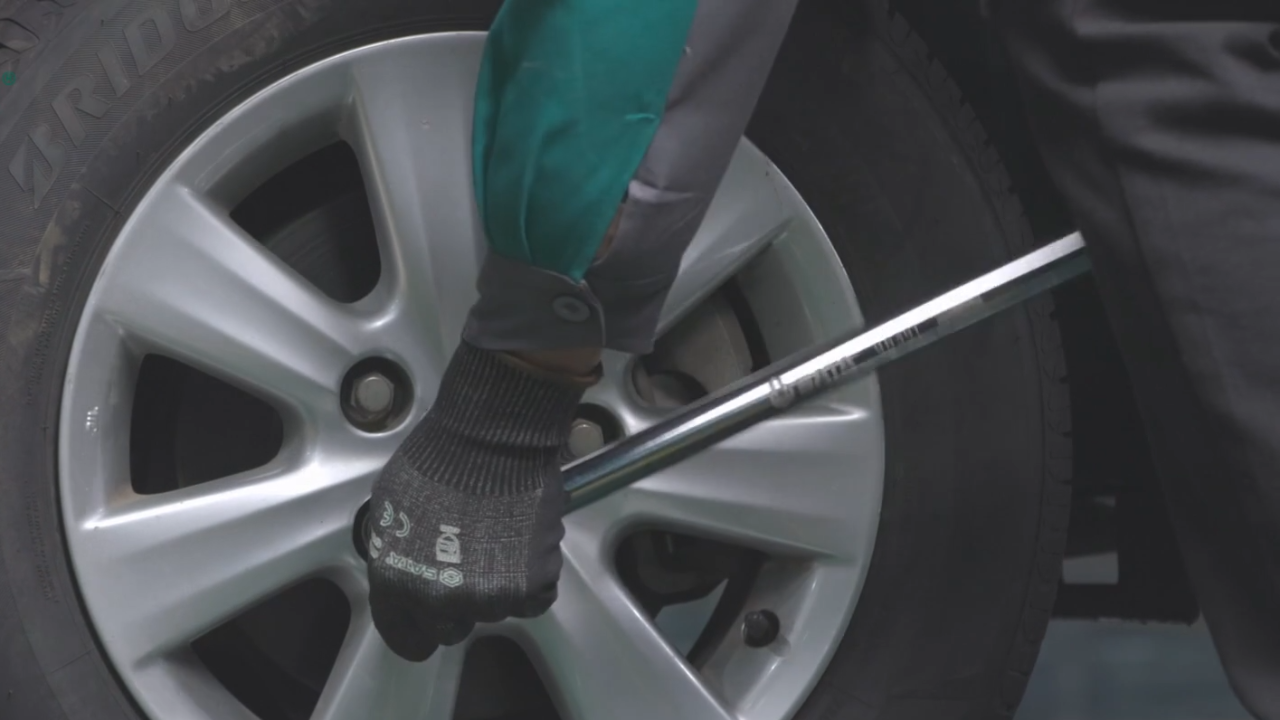
The torque wrench is one of the most classic and widely used tightening tools. Its core values lie in "portability," "controllability," and "high precision."
1. Technical Characteristics and Classification
Torque wrenches typically rely on internal spring mechanisms or electronic sensors to measure torque.
Indicating/Dial Type: Directly displays the current torque value, suitable for laboratory calibration or scenarios with high monitoring requirements for the fastening process.
Preset Type (Click Wrench): Emits a crisp sound when the set torque is reached; the most common manual tightening tool on production lines.
Digital Display Type: Provides real-time feedback through high-precision sensors; not only highly accurate but also capable of recording data—the "cutting-edge force" among manual tightening tools.
2. Core Applicable Scenarios
The portability of torque wrenches makes them irreplaceable in the following scenarios:
Equipment Maintenance and Field Service: In confined spaces or outdoor environments without power or air supply, manual tightening tools are the engineer's last resort.
Torque Calibration and Secondary Verification: Used to check whether the output of other automated tightening tools meets standards, serving as the final checkpoint for quality control.
Dispersed, Low-Frequency Fastening Tasks: Such as laboratory assembly, small machine tool adjustments, etc.—no complex wiring needed, ready to use out of the box.
Drawback: Manual tightening tools rely on human operation. If the operator applies excessive force or uses improper posture, even the most accurate tool may result in deviations in the final bolt preload.
II. Hydraulic Wrench: The "Hercules" of Industry
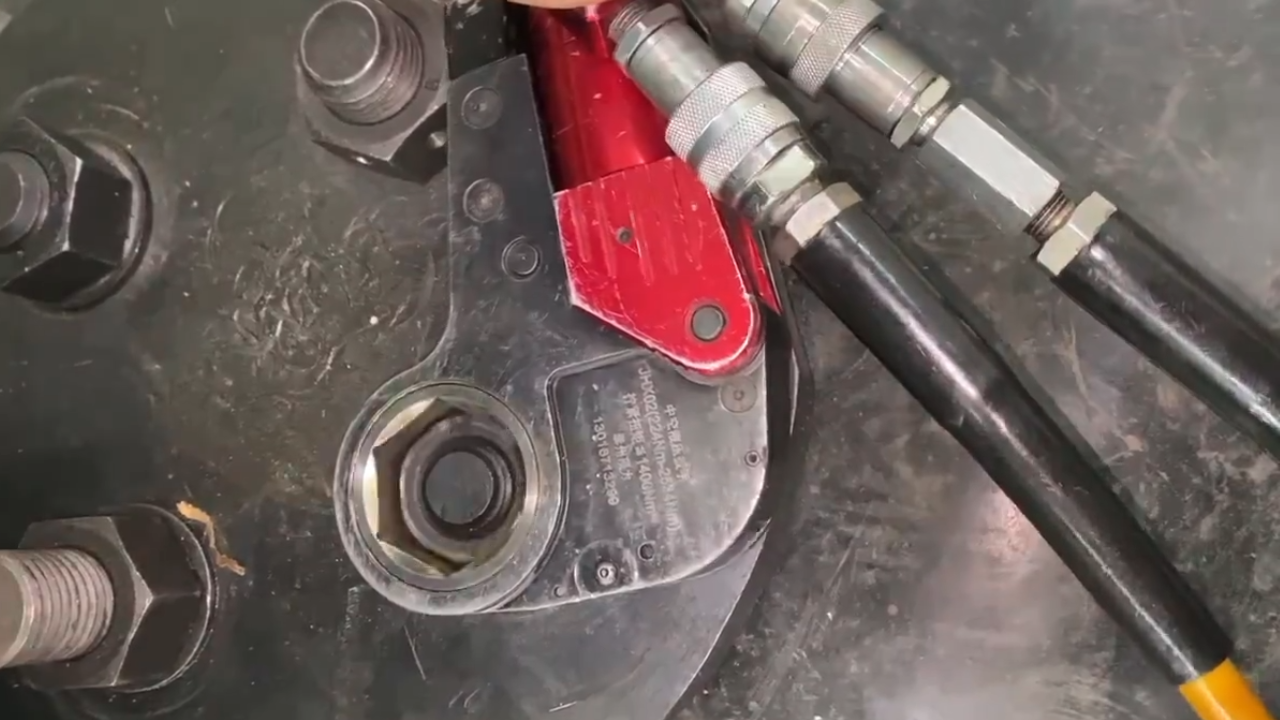
When facing oversized bolts requiring tens of thousands of Newton-meters, human strength and small electric motors prove insufficient. This is when hydraulically powered tightening tools—hydraulic wrenches—are needed.
1. Working Principle and Advantages
Hydraulic tightening tools use pressure generated by a hydraulic pump station to drive the cylinder, which in turn rotates the ratchet mechanism.
Ultra-High Output: Torque output ranges from several hundred Nm to over one hundred thousand Nm, easily handling large-diameter bolts (such as M36 and above).
Compact Structure: Since the power source is in the external pump station, the wrench head itself can be made relatively small, fitting into narrow gaps of many heavy-duty equipment.
2. Applicable Scenarios and Limitations
These heavy-duty tightening tools are active year-round in infrastructure and heavy energy sectors:
Wind Power Generation: Fastening of tower connection bolts and blade bolts.
Petrochemical Industry: Sealing and fastening of flange plates, often requiring multiple hydraulic tightening tools to work simultaneously to ensure even force distribution.
Shipbuilding and Mining: Assembly of large structural components.
Drawback: Hydraulic tightening tools must be tethered to bulky pump stations and hoses. They have slow fastening speeds and pose risks of oil leakage contamination, making them unsuitable for fast-paced assembly line environments.
III. Electric Torque Screwdriver: The "Digital Brain" of Intelligent Manufacturing
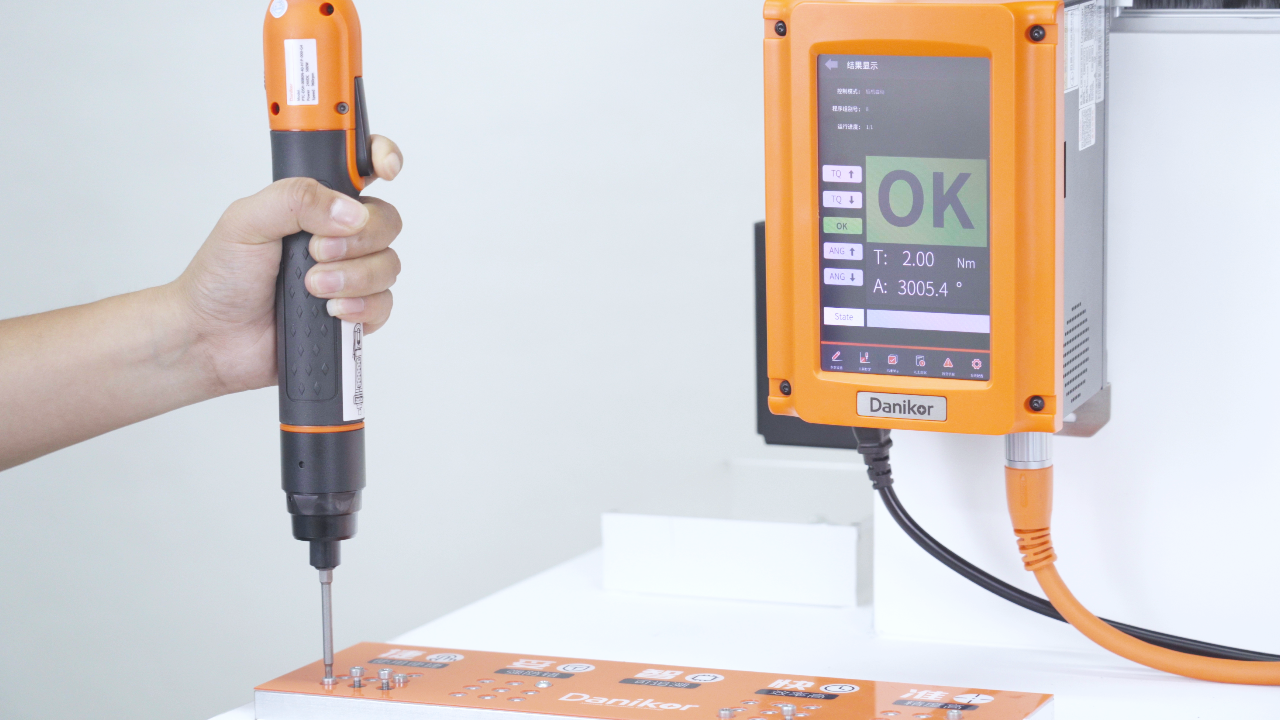
With the advancement of "Industry 4.0," electric torque guns (electric screwdrivers) have become the core tightening tools in industries such as automotive manufacturing and electronics assembly. They are not only a source of power but also a terminal for data.
1. Working Principle and Advantages
Electric torque guns combine brushless motors, planetary reduction gearboxes, and high-precision torque sensors, offering the following functional advantages:
High Efficiency: Fastening speeds are several times that of manual tools, and they can automatically complete the "fast rotation—speed reduction—locking" process.
Multi-Stage Control: Can set complex tightening strategies to ensure bolts are in the optimal plastic deformation range.
Error Prevention and Detection: Intelligent electric tightening tools can identify faults such as damaged threads, cross-threading, or incomplete tightening, and trigger immediate alarms.
2. Scenario Applications: From Full Automation to Full Traceability
In large-scale production lines, the role of electric tightening tools is greatly amplified:
Fully Automated Locking Robots: Electric guns are integrated at the end of robotic arms, cooperating with automatic feeding systems to achieve completely unmanned fastening operations.
MES System Integration: Torque data, curves, and timestamps for every bolt are uploaded to the factory system. If quality issues arise years later, the fastening data can be traced back through the serial number.
In safety-critical fields such as aerospace, medical devices, and automotive braking systems, national or industry standards typically require 100% data traceability. In this context, tightening tools with digital capabilities become a threshold for entry rather than an optional configuration.
Conclusion
Although tightening tools are small, they reflect the evolution of manufacturing industry in China and globally. From the "craftsmanship spirit" of manual tools, to the "Herculean strength" of hydraulic tools, to the "intelligent connectivity" of electric tools, each generation of tightening tool iteration addresses the balance between efficiency and safety. Regardless of how technology evolves, ensuring that every bolt achieves the predetermined clamping force remains the ultimate purpose of all tightening tool design.