Floating Tightening Technology | Solution for OEM Door/Body Hole Position Misalignment
In the field of modern industrial automated assembly, screw tightening is a core process to ensure product quality. Especially in automotive OEM production, the precision of screw assembly on critical parts like doors and bodies directly affects the vehicle's safety and durability. However, hole position misalignment has always been a pain point plaguing OEM automated production. Factors such as workpiece manufacturing tolerances, fixture wear, and small displacements during the assembly process can cause traditional tightening technology to encounter problems like screws failing to enter holes smoothly, cross-threading, or jamming. This not only slows down the production takt time but also increases rework costs and equipment wear. Danikor's independently developed floating tightening technology, with its core advantages of high efficiency and economy, precisely adapts to hole misalignment scenarios for OEM doors, bodies, and more, solving challenges in automated assembly.
Core OEM Pain Point: Difficulty Solving Door/Body Hole Position Misalignment
For automotive OEMs, hole position misalignment on parts like doors and body frames is a particularly prominent issue. These large components have complex curved surfaces, making them prone to positioning deviations during machining and welding. Furthermore, slight wear and small of fixtures during assembly can cause the screw hole to be non-concentric with the tightening tool, a situation difficult for traditional tightening technology to handle.
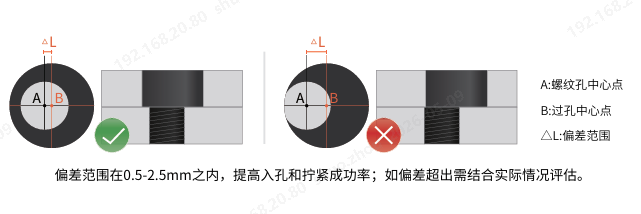
Previously, most OEMs used industrial camera positioning solutions to deal with hole misalignment, but the drawbacks were significant: First, the procurement and maintenance costs of industrial cameras and supporting equipment are high, increasing production costs. Second, debugging the vision system requires significant time investment from specialized personnel, leading to long cycles. Moreover, if new deviations occur during production, parameters need readjustment, severely impacting production takt time and failing to meet the demands of large-scale, efficient production.
Technical Principle: Floating Compensation without External Positioning
Danikor's floating tightening technology features an innovative structural design. Its core advantage lies in its floating compensation function, which can achieve radial floating within a range of 0.5-2.5mm. When the screw and the hole (e.g., on the door or body) are not concentric, no external positioning device is needed. The floating structure automatically adjusts its position, correcting the deviation to ensure the screw enters the hole smoothly and preventing cross-threading or jamming.
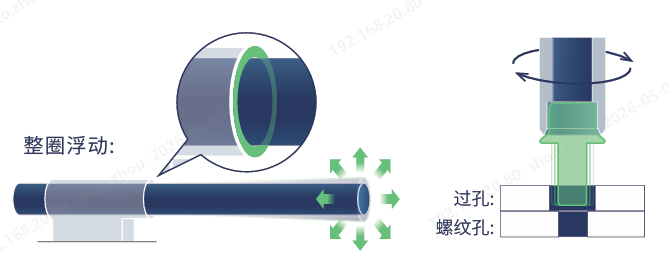
Scenario Adaptation: Precisely Matching OEM Door/Body Assembly Requirements
This technology is specifically optimized for scenarios involving hole misalignment on OEM parts such as doors and bodies. It can adapt to tightening needs for various parts like door hinges and body frames, effectively absorbing component dimensional fluctuations and small assembly errors. By solving the assembly difficulties caused by hole misalignment at the source, it becomes a "high-efficiency tool" for OEM automated assembly.
High Efficiency and Convenience: Reducing Takt Time and Debugging Costs
In terms of efficiency, this technology requires no reliance on external positioning equipment like industrial cameras, eliminating the cumbersome process of visual positioning and significantly shortening the tightening cycle, thus improving production takt time. It also simplifies the debugging process, reduces dependence on specialized technical personnel, and shortens equipment debugging time. This helps OEMs quickly complete production line deployment and start production, boosting overall assembly efficiency.
Economical and Energy-Saving: Reducing Costs and Increasing Efficiency
From an economic perspective, eliminating the need for expensive vision positioning equipment and associated consumables reduces labor costs for equipment maintenance and parameter debugging, significantly lowering initial investment and operating costs for OEMs. Furthermore, this technology allows for loosening component material tolerance requirements, lowering the precision threshold for parts manufacturing, which further saves OEMs material manufacturing costs, achieving the dual value of "cost reduction and efficiency increase".
Technical Value: Improving Assembly Quality and Strengthening OEM Competitiveness
During the tightening of critical parts like doors and bodies, the floating structure not only increases the success rate of screw insertion, reducing production stoppages and rework caused by screws failing to enter holes, but also lowers the risk of damage to equipment and workpieces from cross-threading or jamming. At the same time, the consistency of tightening quality effectively enhances the connection reliability of doors, bodies, and other parts, improving the overall vehicle assembly quality. This helps OEMs strengthen product competitiveness and achieve high-quality production.
As a core technology deeply rooted in the automated tightening field, Danikor's floating tightening technology, thanks to its high adaptability to hole misalignment scenarios for OEM doors/bodies and its outstanding advantages of high efficiency, economy, and stability, has been widely adopted in the automated assembly lines of major OEMs. It serves as a key support for solving the problem of hole misalignment and enabling large-scale production.