In intelligent manufacturing fields such as 3C electronics, semiconductors, and automotive manufacturing, flexible feeders have become key equipment for solving feeding challenges with irregular and precision components. As market demand continues to rise, the price of flexible feeders has become one of the core considerations in corporate procurement decisions. This article provides a comprehensive analysis of the core logic affecting flexible feeder pricing from three fundamental dimensions: core component costs, production processes and technical thresholds, and after-sales service systems.
I. Core Component Costs: The Basic Determinant of Flexible Feeder Price
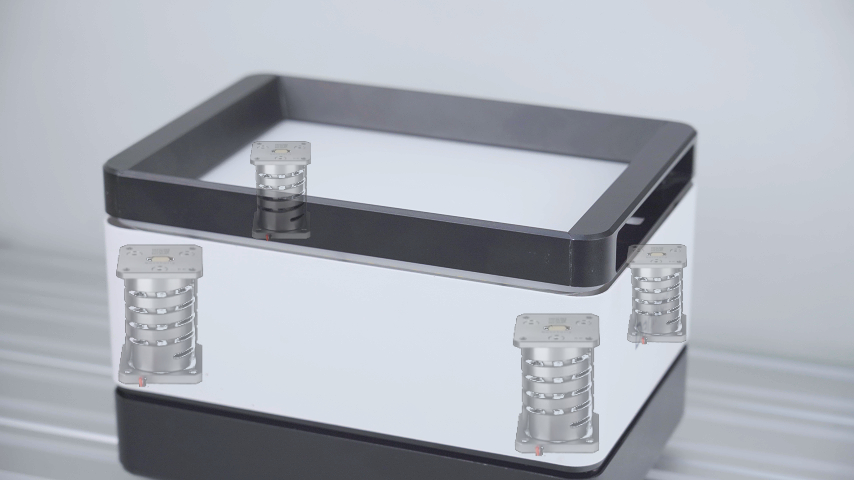
The quality and cost of core components directly determine the baseline of flexible feeder pricing. As the core driving element of flexible feeders, quality differences in voice coil motors directly create price gaps. High-quality voice coil motors require significant investment in material selection and structural design. For example, Danikor's voice coil motors use aerospace-grade aluminum for their core elastic structure, offering not only far superior strength to ordinary aluminum but also excellent fatigue resistance and lightweight characteristics. The maintenance-free aluminum spring built with this material resists aging and requires no periodic replacement. Combined with structural optimization through finite element analysis, the aluminum spring experiences more uniform force distribution, enhancing structural stability and service life. This structural optimization requires substantial R&D resources for simulation testing, further increasing motor development costs. Moreover, Danikor has conducted 100 million reciprocating durability tests on this voice coil motor, with results showing the aluminum spring remained intact and motor performance showed no degradation, with failure rates far below industry average. These advantages make Danikor's flexible feeder price higher than ordinary brands, but they significantly reduce customers' long-term operation and maintenance costs for clients.
II. Production Process and Technical Thresholds: The Core Premium Source of Flexible Feeders Price
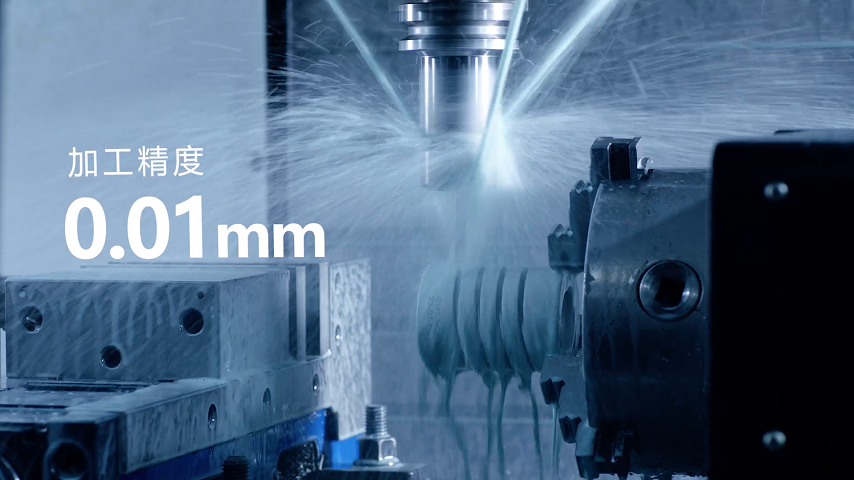
The precision level of production processes and investment in R&D are core reasons for price differences in flexible feeders. Companies that self-develop and produce using precision equipment typically have higher prices than those that simply assemble purchased components, representing the cost increase and quality assurance from full industry chain control. For instance, Danikor has introduced 5-axis and 4-axis CNC machining equipment and CMM (Coordinate Measuring Machine) testing equipment, achieving autonomous control from raw material processing to core component assembly, with correspondingly higher flexible feeder prices than industry average. Some small and medium-sized manufacturers save costs on R&D and precision machining by purchasing standardized components for assembly. While their flexible feeder prices are lower, product stability and consistency are difficult to guarantee, with higher failure and downtime rates.
Technical innovation breakthroughs also drive up flexible feeder prices. For example, Danikor's one-click frequency finding can automatically adapt to material vibration frequencies with a single click, simplifying manual operations and significantly reducing debugging time. It also enables flexible control of vibration direction to quickly correct material vibration states and positions. Additionally, vibration isolation technology can isolate 95% of vibration energy from the workbench, preventing interference when multiple vibration plates are used together. Although the price is higher, these technical advantages enable import substitution, substantially reducing procurement costs for high-demand applications.
III. After-Sales Service System: The Hidden Value Support for Flexible Feeder Price
The completeness of after-sales service systems directly affects pricing logic for flexible feeders. A full-chain service model including pre-stage technical training and post-stage maintenance support typically prices flexible feeders significantly higher than pure hardware sales, but this premium can reduce long-term operation and maintenance costs for enterprises. In terms of pre-stage services, professional manufacturers provide customized feeding solution evaluation, equipment installation and commissioning, and operator technical training. For example, Danikor provides full-chain services for partner enterprises, with technical teams on 24-hour standby to support on-site commissioning and ensure employees become proficient quickly.
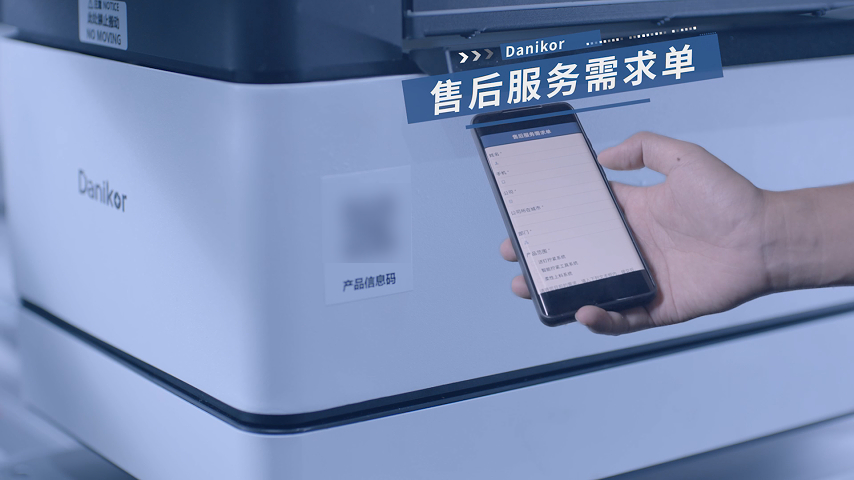
Post-stage maintenance support is the core value of after-sales service premiums. Danikor can provide customers with efficient on-site response services to quickly resolve equipment failures and reduce downtime losses. In contrast, manufacturers with pure hardware sales models bear no post-stage maintenance responsibility. While their flexible feeder prices are lower, customers must bear repair costs and downtime losses themselves, potentially resulting in higher total long-term costs.
In Summary, the price of flexible feeders is the result of multiple factors including core component costs, production process levels, after-sales service quality, brand strength, specifications, and customization requirements. Enterprises should not simply pursue low prices in procurement but must weigh cost-effectiveness based on production needs: For industries with high stability requirements such as precision electronics and medical devices, brands with strong R&D capabilities and comprehensive after-sales service should be selected. Although their flexible feeder prices are higher, they can ensure production continuity.