Flexible Feeder FAQ - DanikorFlexible Feeder FAQ
In the current era where manufacturing is transforming towards "small batches, multiple varieties, and fast delivery," flexible feeders, with their flexible adaptability, precision, and efficiency, have become core automation equipment in fields such as 3C electronics, automotive electronics, and new energy. Many enterprises have numerous questions during selection and use. This article comprehensively analyzes the key points of flexible feeders in a Q&A format to help enterprises quickly understand and reasonably apply this automation equipment.
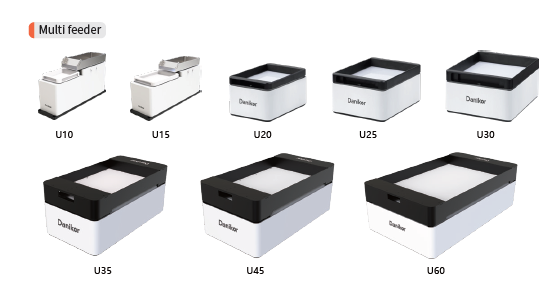
1. Q: What is a flexible feeder, and what is its core function?
A: A flexible feeder is an industrial automation feeding equipment centered on the concept of "machines actively adapting to materials." It integrates technologies such as flexible vibration, machine vision, and robotic grasping, breaking the limitation of traditional rigid feeders where "materials must adapt to the machine." It achieves non-destructive and precise feeding for various materials. Its core function is to solve the challenges of sorting, identifying, and grasping disordered materials, adapting to the needs of multi-variety, small-batch production. It replaces manual sorting, improves production line efficiency and product yield, and reduces labor costs and material waste.
2. Q: What is the working principle of vision-guided flexible feeders?
A: This is the core technology of flexible feeders, essentially a collaborative closed-loop system between the vibratory feeder and machine vision. First, materials are placed into the flexible vibratory bowl. The equipment uses vibration with adjustable frequency to scatter, flip, and spread the disordered materials, evenly distributing them on the bowl surface to prevent adhesion or jamming. Subsequently, an industrial camera captures images of the materials on the bowl surface. The vision system uses AI algorithms to identify materials in the correct orientation in real-time, precisely locate their positions, and convert the image coordinates into spatial coordinates recognizable by the robot. Then, the system sends instructions to guide the robot to move to the target position, completing the grasping and precise placement of the material. Finally, the system dynamically adjusts the vibration frequency and amplitude based on the picking status, forming a closed-loop visual guidance system that ensures a stable and efficient feeding process.
3. Q: Which materials and industries are suitable for flexible feeders?
A: Flexible feeders have an extremely wide range of applications. Regarding materials, they can handle micro parts, irregularly shaped parts, and fragile parts ranging from 0.1mm to 300mm in size. They are compatible with various materials such as plastic, metal, ceramic, and glass, whether it's a regular hexagonal nut, a twisted spring leaf, or a fragile glass lens. In terms of industries, they are widely used in fields like 3C electronics, automotive electronics, new energy, medical devices, and precision instruments. They are particularly suitable for precision manufacturing scenarios that require frequent product changeovers and have high demands for non-destructive material handling.
4. Q: Compared to traditional feeding equipment, what are the core advantages of flexible feeders?
A: Compared to traditional rigid feeders and manual feeding, flexible feeders offer three core advantages. First, strong flexibility and adaptability: no need to modify mechanical structures; rapid product changeovers are achieved by calling up different recipes, adapting to multi-variety production. Second, non-destructive feeding: employing flexible contact design and micro-vibration control significantly improves material integrity, avoiding scratches and deformation. Third, intelligence and efficiency: equipped with visual positioning and intelligent control systems, they enable unattended operation, achieve fast feeding cycles, greatly enhance production line efficiency, and reduce manual errors.
5. Q: What are the common faults and solutions in the daily use of flexible feeders?
A: There are mainly three types of common faults in daily use:
Jamming in the vibratory bowl: Often caused by incorrect material size or improper vibration parameters. Solution: Check material specifications, adjust the vibration frequency, or replace the vibration springs.
Inaccurate visual positioning: Often due to dust on the camera lens or outdated calibration. Solution: Clean the lens and re-calibrate using a standard part.
Suction cup fails to pick up material: Check the suction cup for wear, the air tubing for seals, and ensure the vacuum generator pressure meets the standard.
Regular cleaning and parameter checks can significantly reduce the occurrence of faults.
As the core adaptable equipment for intelligent manufacturing, flexible feeders, with their flexibility, precision, and efficiency, perfectly meet the demands of flexible production in modern manufacturing. Choosing the right flexible feeder can not only solve feeding pain points but also help enterprises upgrade their production lines automation, reduce costs, and enhance competitiveness.