In automated assembly production lines, whether the feeding cycle time and tightening cycle time of automatic screw feeding machines match directly determines the stability and production efficiency of the line. Many enterprises frequently encounter issues such as machine downtime, cycle time loss, and reduced production capacity due to mismatched cycle times when using automatic screw feeding machines, affecting production schedules. This article provides a detailed analysis of methods for matching the feeding cycle time and tightening cycle time of automatic screw feeding machines, helping enterprises optimize line configuration and maximize the value of automatic screw feeding machines.
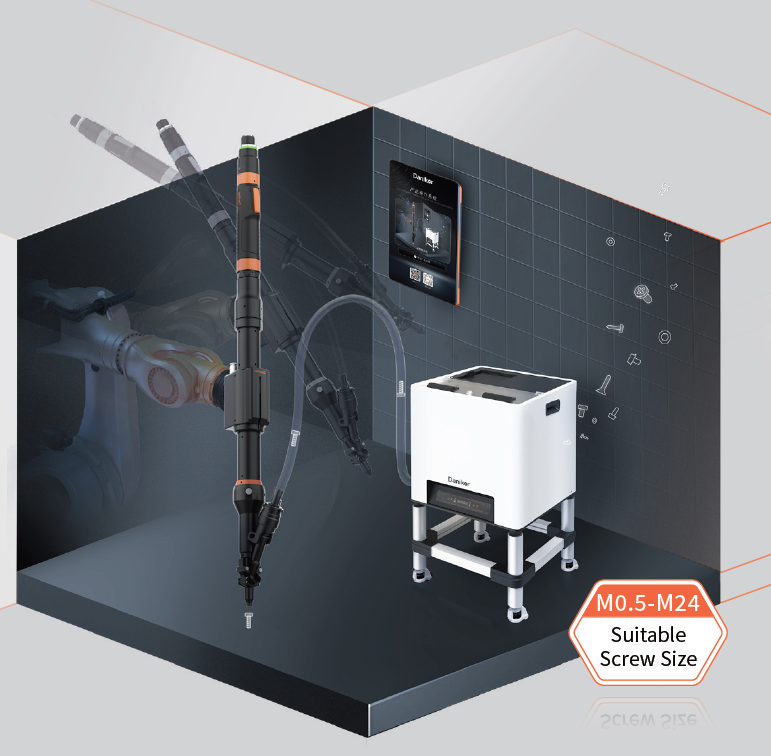
I. Core Concepts: Definitions of Feeding Cycle Time and Tightening Cycle Time in Automatic Screw Feeding Machines
1.1 Feeding Cycle Time
Feeding cycle time refers to the total time required for the feeding system of an automatic screw feeding machine to complete the entire process of retrieving a single screw from the hopper, screening it, and delivering it to the tightening gun head, typically measured in seconds per screw. The feeding cycle time is influenced by factors such as the type of feeder (e.g., vibratory bowl feeding, pneumatic blow feeding), screw specifications, and feeding path, and exists within a certain fluctuation range rather than being a fixed value.
1.2 Tightening Cycle Time
Tightening cycle time refers to the total time required for the tightening gun to complete the entire process of aligning, tightening, and resetting for a single screw, also measured in seconds per screw. The tightening cycle time is primarily determined by tightening process requirements (such as tightening torque and rotational speed), screw installation depth, and workstation layout. It is relatively more stable than the feeding cycle time with smaller fluctuations.
II. Key Pain Points: Hazards and Common Causes of Cycle Time Mismatch
2.1 Core Hazards of Cycle Time Mismatch
The mismatch between feeding cycle time and tightening cycle time is a high-frequency pain point in the application of automatic screw feeding machines. The main hazards are threefold: First, when the feeding cycle time is slower than the tightening cycle time, the tightening gun idles while waiting, causing production line downtime and directly reducing production efficiency. Second, when the feeding cycle time is too fast, screws accumulate at the gun head or in the delivery pipeline, easily causing jamming and material leakage, increasing material waste and equipment failure risks. Third, long-term cycle time mismatch accelerates equipment wear, shortens the service life of feeders and tightening guns, and increases equipment maintenance costs.
2.2 Common Causes of Cycle Time Mismatch
The causes of cycle time mismatch between the two can be divided into two categories: First, improper selection during the initial phase—failing to choose an automatic screw feeding machine with appropriate feeding capacity based on tightening cycle time requirements, blindly pursuing low prices
In automated assembly production lines, whether the feeding cycle time and tightening cycle time of automatic screw feeding machines match directly determines the stability and production efficiency of the line. Many enterprises frequently encounter issues such as machine downtime, cycle time loss, and reduced production capacity due to mismatched cycle times when using automatic screw feeding machines, affecting production schedules. This article provides a detailed analysis of methods for matching the feeding cycle time and tightening cycle time of automatic screw feeding machines, helping enterprises optimize line configuration and maximize the value of automatic screw feeding machines.
I. Core Concepts: Definitions of Feeding Cycle Time and Tightening Cycle Time in Automatic Screw Feeding Machines
1.1 Feeding Cycle Time
Feeding cycle time refers to the total time required for the feeding system of an automatic screw feeding machine to complete the entire process of retrieving a single screw from the hopper, screening it, and delivering it to the tightening gun head, typically measured in seconds per screw. The feeding cycle time is influenced by factors such as the type of feeder (e.g., vibratory bowl feeding, pneumatic blow feeding), screw specifications, and feeding path, and exists within a certain fluctuation range rather than being a fixed value.
1.2 Tightening Cycle Time
Tightening cycle time refers to the total time required for the tightening gun to complete the entire process of aligning, tightening, and resetting for a single screw, also measured in seconds per screw. The tightening cycle time is primarily determined by tightening process requirements (such as tightening torque and rotational speed), screw installation depth, and workstation layout. It is relatively more stable than the feeding cycle time with smaller fluctuations.
II. Key Pain Points: Hazards and Common Causes of Cycle Time Mismatch
2.1 Core Hazards of Cycle Time Mismatch
The mismatch between feeding cycle time and tightening cycle time is a high-frequency pain point in the application of automatic screw feeding machines. The main hazards are threefold: First, when the feeding cycle time is slower than the tightening cycle time, the tightening gun idles while waiting, causing production line downtime and directly reducing production efficiency. Second, when the feeding cycle time is too fast, screws accumulate at the gun head or in the delivery pipeline, easily causing jamming and material leakage, increasing material waste and equipment failure risks. Third, long-term cycle time mismatch accelerates equipment wear, shortens the service life of feeders and tightening guns, and increases equipment maintenance costs.
2.2 Common Causes of Cycle Time Mismatch
The causes of cycle time mismatch between the two can be divided into two categories: First, improper selection during the initial phase—failing to choose an automatic screw feeding machine with appropriate feeding capacity based on tightening cycle time requirements, blindly pursuing low prices or high speeds while ignoring cycle time compatibility. Second, unreasonable commissioning during the later phase—failing to adjust feeding parameters according to actual production conditions and failing to set up effective buffering mechanisms, resulting in excessive fluctuations in feeding cycle time that cannot keep up with the tightening cycle time.
III. Core Methods: Practical Techniques for Cycle Time Matching in Automatic Screw Feeding Machines
3.1 Precise Calculation to Clarify Cycle Time Requirements
The prerequisite for matching cycle times is precise calculation of tightening cycle time and feeding requirements. First, clarify the maximum tightening time for a single screw (including alignment, tightening, and resetting), and calculate the total tightening time for the workstation based on the number of screws per workstation. Second, determine the minimum feeding capacity of the feeding system based on production capacity requirements, ensuring that feeding capacity ≥ tightening demand × redundancy coefficient. The redundancy coefficient is typically 1.2–1.5, reserving certain fluctuation space to avoid insufficient feeding.
3.2 Setting Up Buffering Mechanisms to Offset Cycle Time Fluctuations
Feeding cycle time has inherent fluctuations, and buffering design is needed to reduce its impact on tightening cycle time. Common buffering methods include three types: First, installing a swing arm module at the tightening gun head to pre-store one screw, allowing immediate replenishment after tightening is completed to avoid idle waiting. Second, adding a screw storage module along the delivery path to temporarily store multiple screws, addressing brief feeding delays. Third, optimizing feeding timing—having the feeder advance the next screw into the blow tube during the tightening process, ensuring immediate screw retrieval after tightening is completed.
3.3 Scientific Selection to Avoid Inherent Mismatch
During selection, it is necessary to abandon the "average cycle time" misconception and prioritize selection based on the slowest feeding time rather than average feeding cycle time, ensuring that even when maximum feeding fluctuations occur, tightening cycle time requirements can be met. Simultaneously, select appropriate feeding methods based on screw specifications and production cycle time—for example, pneumatic blow feeding for small-specification screws to increase feeding speed, and flexible feeders for special-shaped screws to balance speed and stability.
Conclusion: Cycle Time Matching is the Key to Efficient Operation of Automatic Screw Feeding Machines
Matching the feeding cycle time and tightening cycle time of automatic screw feeding machines is a core prerequisite for achieving efficient and stable operation of production lines. Enterprises only need to perform precise calculations, scientific selection, and properly set up buffering mechanisms to effectively avoid issues such as downtime and jamming, fully leverage the automation advantages of automatic screw feeding machines, reduce labor costs, and improve production efficiency and product assembly quality. Selecting appropriate automatic screw feeding machines and properly commissioning cycle times can truly support the automation upgrade of production lines.