In new energy vehicles, motor drive systems, and industrial automation equipment, the motor controller is a critical core component that determines system performance. Among its internal components, the assembly quality of the PCBA (Printed Circuit Board Assembly) directly affects the overall stability, safety, and long-term reliability of the equipment.
During actual production, many companies focus heavily on tightening torque accuracy but often overlook another equally critical factor—screw cleanliness. If screws carry dust, metal debris, or other contaminants during the assembly process, they can pose potential risks to the PCBA circuit. Therefore, in motor controller assembly processes, clean screw feeding technology is gradually becoming an important means of ensuring electronic assembly quality.
I. Why Is Screw Cleanliness So Important in PCBA Assembly?
PCBA circuit boards typically integrate a large number of precision electronic components and high-density circuits, making them extremely sensitive to minute contaminants. Once screws carry impurities into the circuit area during assembly, multiple problems may arise, such as:
Risk of Circuit Short CircuitsIf metal particles or conductive debris fall between circuit traces or solder joints, they may cause short circuits and affect the normal operation of the controller.
Unstable Electrical ConnectionsIf contaminants adhere to contact surfaces or between threads, they may affect the stable transmission of screw clamping force, leading to poor contact.
Decreased Long-Term Product ReliabilityUnder complex operating conditions such as vibration and temperature cycling, residual particles may gradually migrate to critical circuit areas, increasing the risk of product failure.
Therefore, in the assembly process of motor control products, not only precise tightening is required, but also a clean assembly environment.
II. Step Feeder: Achieving Clean Screw Conveyance
To reduce contamination risks, an increasing number of electronic assembly production lines are adopting step feeders. Compared with traditional vibratory bowl feeding methods, step feeding systems not only operate more stably but can also integrate multi-stage cleaning designs into the feeding process, achieving gradual cleanliness control of screws.
The step feeder drives the push plate to reciprocate through a pneumatic cylinder, with no violent vibration or friction throughout the entire process, fundamentally reducing the probability of metal debris generation. Additionally, the bottom of the hopper is designed with openings, paired with customized vacuum adsorption components to suck away dust particles from the screw surface, reducing dust residue. Furthermore, the tightening module's nozzle can be customized with cleaning components on both sides; after screws are blown to the nozzle, they undergo vacuum dust removal again. The tightening module can also adopt a vacuum suction method to remove particles generated during the tapping process and debris produced between the bit and the screw head. After tightening is complete, the suction tube and bit are moved to a cleaning station for dust removal, and the product surface is cleaned with ionized air or electrostatic brushes, better meeting technical cleanliness requirements.
Danikor's 0.8L step feeder meets the typical requirements of electronic assembly production lines for equipment size and layout flexibility:
Small footprint, easy to integrate into electronic assembly workstations
Compact structure, suitable for desktop installation
Stable feeding, reducing jamming and downtime risks
Flexible layout, adaptable to both manual workstations and automated production lines
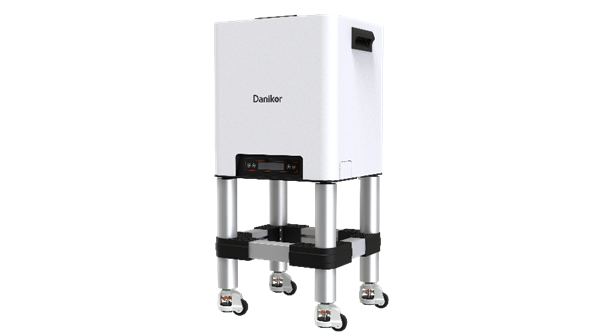
Compact feeding equipment can not only improve production efficiency but also better meet the cleanliness and space utilization requirements of electronic assembly.
In the PCBA assembly process of motor controllers, although screws are just small fasteners, their cleanliness directly affects circuit stability and product safety. By adopting step feeders with multi-stage cleaning designs and combining them with intelligent tightening technology, the risk of contaminants entering the circuit board area can be effectively reduced, achieving a more stable and reliable electronic assembly process.