In automated assembly production lines, flexible feeding systems are widely used in industries such as 3C electronics, automotive components, new energy, and medical devices. They enable automatic feeding of multi-variety, small-batch products through a combination of vision recognition, flexible vibration plates, and robotic grasping.
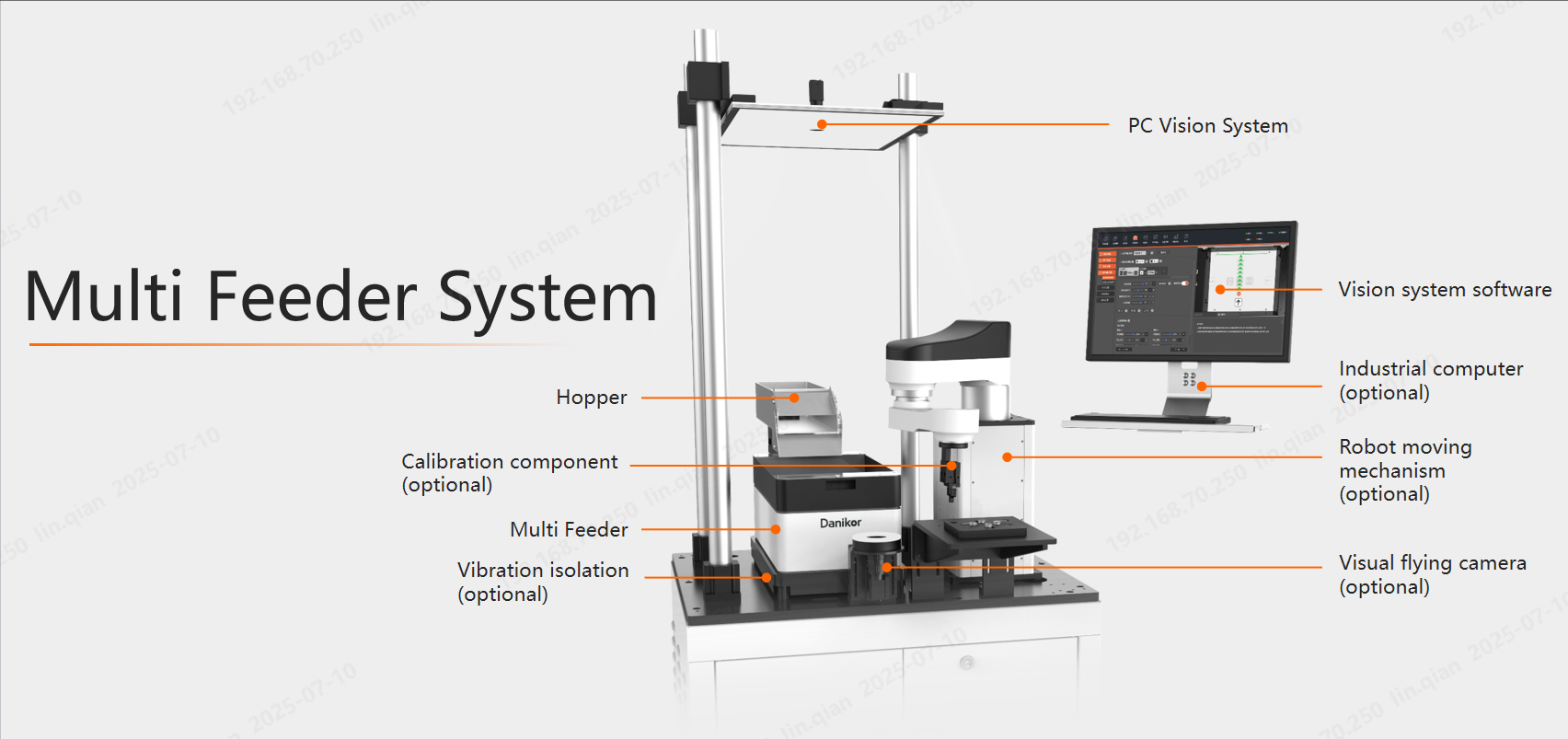
However, many engineers encounter a common problem in practical applications: why does the cycle time vary significantly when switching between different products on the same flexible feeding system? Some products can achieve 2–3 seconds per piece, while others require 6–10 seconds or even longer.
So, what factors are affecting the cycle time of flexible feeding?
I. Product Structure Differences Are the Root Cause of Cycle Time Variations
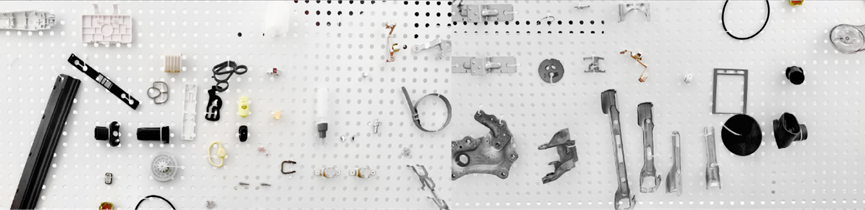
Different levels of shape complexity: Regular parts (such as cylinders and standard block-shaped components) are easier to be flattened by vibration and quickly identified and positioned.
However, irregular curved surface products with special shapes: unstable orientation, prone to flipping and stacking
This leads to:
The result is—naturally longer cycle times
II. Feeding Orientation Requirements
Flexible feeding heavily relies on vision systems. The orientation of materials during feeding. Is it necessary to distinguish between front and back? Are there specific orientation requirements during grasping? Are there requirements for grasping positions? Is the final placement orientation easy to achieve?
Vision cycle time differences typically come from the following factors:
Different recognition difficulties
Severe surface reflection (electroplated parts, stainless steel parts)
Transparent or semi-transparent materials
Colors similar to the background
All of these can lead to extended recognition time.
III. Different Pick-and-Place Accuracy Requirements
Pick-and-place accuracy is one of the most important factors affecting feeding cycle time.
For the same flexible feeding system, palletizing with low accuracy requirements only involves two steps: grasping + fixed-point placement, allowing for fast cycle times.
However, assembly feeding, which involves assembling different parts, must consider the impact of accuracy, resulting in slower cycle times.
Different feeding purposes lead to significant differences in feeding cycle times.
IV. Degree of Parameter Matching in Flexible Feeding
The same equipment can also show cycle time differences depending on the degree of parameter optimization:
Vibration frequency, vibration direction, etc.
If in-depth debugging is not performed for specific products, the cycle time often cannot reach the optimal state.
Conclusion
Large cycle time differences are not necessarily due to insufficient equipment performance, but rather the combined result of: product characteristics, vision difficulty, feeding conditions, and degree of parameter optimization.